How Large Vessels Withstand Hurricanes
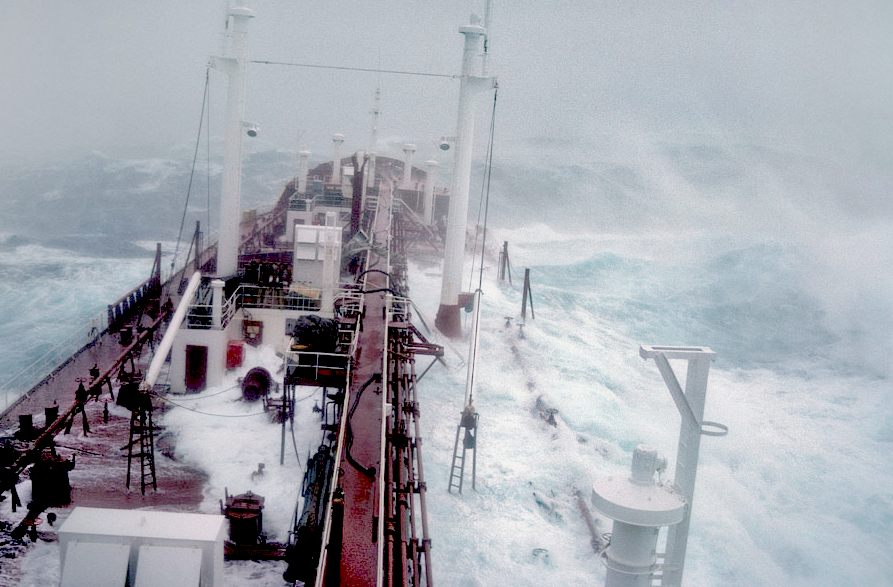
On October 1st, 2015, communications with the massive Maersk cargo ship, the El Faro, were lost after captain Michael Davidson radioed in to report that the ship had lost engine propulsion, was taking on water, and listing a "manageable" 15 degrees to the side. One crew member, Danielle Randolph, also expressed concern in an email written to her mother earlier that day — "Not sure if you've been following the weather at all, but there is a hurricane out here and we are heading straight into it." Unfortunately, her concerns were completely justified. 30 days later, search crews identified the vessel approximately 15,000 ft underwater. The entire cargo and crew of 33 were lost, making it the worst disaster involving an American cargo vessel in decades.
Modern cargo vessels are designed and built to withstand the strongest storms, but no crew wants to find themselves in the midst of a hurricane. Being caught in a storm at sea can be a terrifying experience even for the most seasoned seafarer. A day's worth of fuel for a cargo ship alone can cost tens of thousands of dollars, so deviating from a schedule can be a massive financial liability.
While the weight and size of cargo ships helps to stabilize them, the best place for a large vessel to be during a storm is actually out at sea. Despite being constructed from the strongest materials, the massive waves of intense storms can push large vessels into the concrete pilings of a dock, causing damage to the vessel's hull.
Most cargo ship captains follow the "1-2-3 Rule," referring to the first, second, and third day of a hurricane's forecast. Following the predicted weather forecast would ideally allow a traveling cargo vessel to stay at least 100 nautical miles from a hurricane's path. However, hurricanes can change direction at any moment, catching an unsuspecting vessel in its destructive path. Slowing down to assess the weather, changing course to circumvent the storm, or simply returning to port are all viable options that may have saved the El Faro and other lost vessels.